By clicking “Accept All Cookies”, you agree to the storing of cookies on your device to enhance site navigation, analyze site usage, and assist in our marketing efforts. View our Privacy Policy for more information.
Why Exercise Isn't the Risk—Doing Nothing Is
Why not exercising is more dangerous than exercising.
By
July 15, 2026
)%20(1).png)
Related

If you've ever said, "I'd love to start working out, but I'm afraid I'll get hurt," you're not alone.
We hear it all the time.
Sometimes it comes from a previous injury. Sometimes it's because someone has never exercised before. And occasionally, someone tells us, "My doctor told me to be careful because CrossFit (or lifting weights) is dangerous."
Let's address that concern.
Any physical activity carries some risk. But when we compare those risks to the consequences of living an inactive lifestyle, the evidence is overwhelmingly clear:
Not exercising is far more dangerous than exercising.
The Real Health Risk: Physical Inactivity
The World Health Organization identifies physical inactivity as one of the leading risk factors for death worldwide.
According to the WHO:
"Regular physical activity helps prevent and manage heart disease, stroke, diabetes and several cancers. It also helps prevent hypertension, maintain healthy body weight and can improve mental health, quality of life and well-being."
Physical inactivity contributes to millions of preventable deaths every year.
Think about that.
We often worry about pulling a muscle in the gym while ignoring the much larger risks of heart disease, diabetes, obesity, osteoporosis, and declining independence.
Your Body Was Designed to Move
Muscle isn't just for looking strong.
It protects your joints.
It helps regulate blood sugar.
It improves balance.
It allows you to climb stairs, carry groceries, play with your kids, and get off the floor as you age.
Unfortunately, adults naturally lose muscle mass beginning around age 30—a process called sarcopenia. Without resistance training, this loss accelerates with age.
Research published in the Journal of Cachexia, Sarcopenia and Muscle states:
"Sarcopenia is associated with physical disability, poor quality of life, and death."
Strength training is one of the few proven ways to slow—or even reverse—that process.
What About Injuries?
Let's talk honestly.
Can someone get injured exercising?
Absolutely.
Can someone get injured gardening, playing pickleball, carrying groceries, or slipping off a curb?
Also yes.
The goal isn't to eliminate all risk.
The goal is to manage it intelligently.
Research comparing injury rates across activities consistently finds that well-coached strength training and CrossFit have injury rates similar to or lower than many recreational sports such as running, soccer, basketball, and rugby.
One systematic review published in the Orthopaedic Journal of Sports Medicine concluded:
"The injury incidence of CrossFit is comparable to weightlifting, powerlifting, and gymnastics."
Most exercise-related injuries are overuse issues or occur when people progress too quickly without proper coaching.
That's why coaching matters.
Exercise Is Medicine
The American College of Sports Medicine launched its Exercise is Medicine® initiative because the evidence is so overwhelming.
Regular exercise has been shown to reduce the risk of:
- Heart disease
- Stroke
- Type 2 diabetes
- High blood pressure
- Depression and anxiety
- Osteoporosis
- Certain cancers
- Cognitive decline
-
Exercise doesn't just help you live longer.
It helps you live better.
"But I'm Too Out of Shape"
This may be the biggest misconception we hear.
People think they need to get fit before joining a gym.
That's like saying you need to learn Spanish before taking a Spanish class.
Everyone starts somewhere.
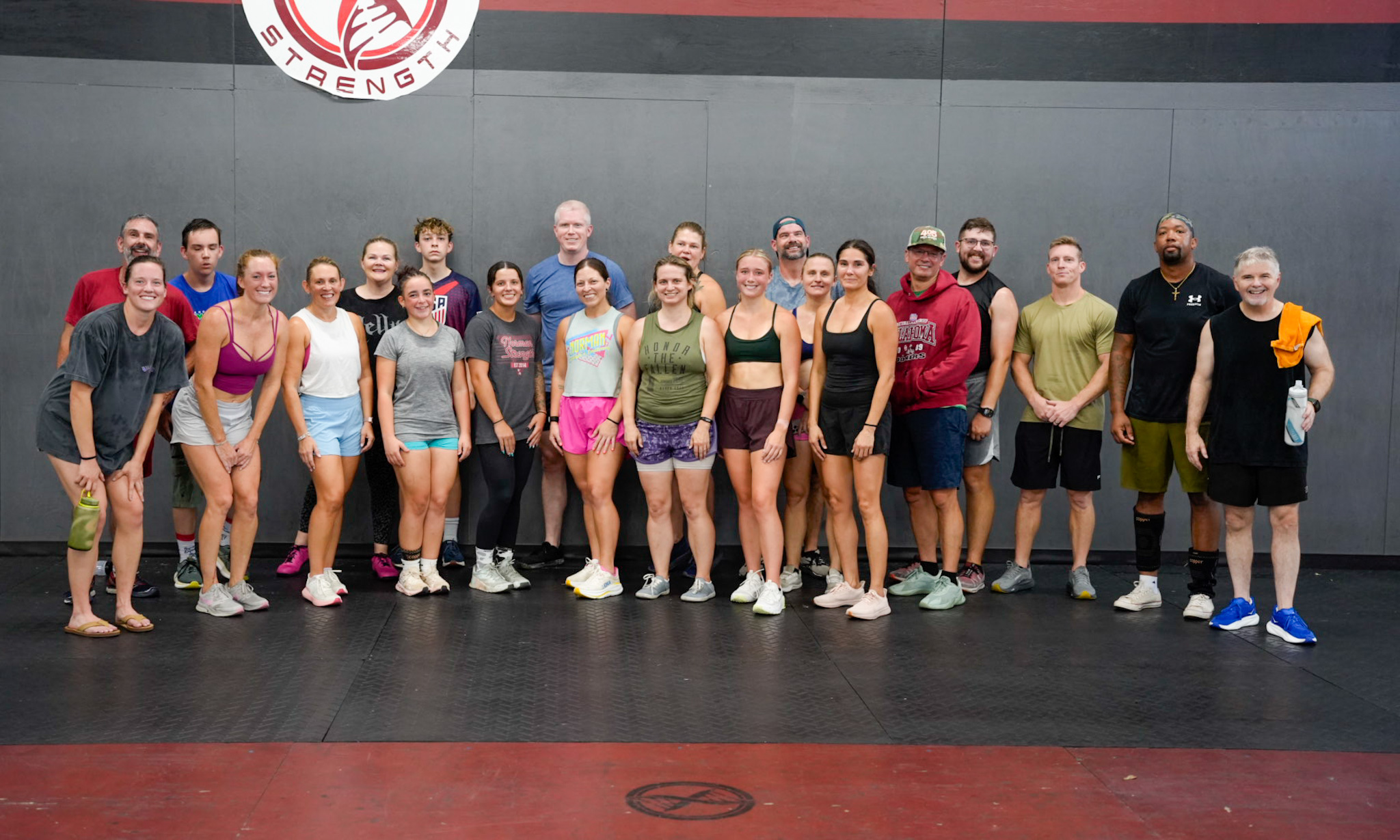
At Norman Strength and Conditioning, every workout can be modified to match your current ability.
Can't run?
We'll walk.
Can't do push-ups?
We'll elevate them.
Never touched a barbell?
We'll teach you.
Our job isn't to impress you.
Our job is to meet you where you are and help you improve safely.
The Biggest Risk Is Waiting
Every month you delay exercising, you lose a little more strength.
A little more endurance.
A little more balance.
A little more confidence.
Meanwhile, your risk for chronic disease continues to climb.
Starting doesn't mean you have to be perfect.
It just means you're choosing progress over postponement.
Our Commitment
At Norman Strength and Conditioning, we don't believe in throwing beginners into workouts they aren't prepared for.
We coach movement first.
We scale workouts appropriately.
We focus on quality before intensity.
Because the safest athlete isn't the one who never exercises.
It's the one who moves well, gets stronger gradually, and stays consistent for years.
If you've been waiting because you're afraid of getting hurt, remember this:
The question isn't whether exercise has risks.
The question is whether those risks are greater than the risks of doing nothing.
Science has already answered that.
And the answer is clear.
Your future health is worth investing in today.
References
- World Health Organization. Physical Activity Fact Sheet. https://www.who.int/news-room/fact-sheets/detail/physical-activity
- Warburton DER, Bredin SSD. Health benefits of physical activity: a systematic review of current systematic reviews. Current Opinion in Cardiology. 2017.
- American College of Sports Medicine. Exercise is Medicine.
- Cruz-Jentoft AJ, et al. Sarcopenia: Revised European consensus on definition and diagnosis. Age and Ageing. 2019.
- Claudino JG, et al. CrossFit Overview: Systematic Review and Meta-analysis. Sports Medicine Open. 2018.
- Weisenthal BM, et al. Injury Rate and Patterns Among CrossFit Athletes. Orthopaedic Journal of Sports Medicine. 2014.
.jpg)